

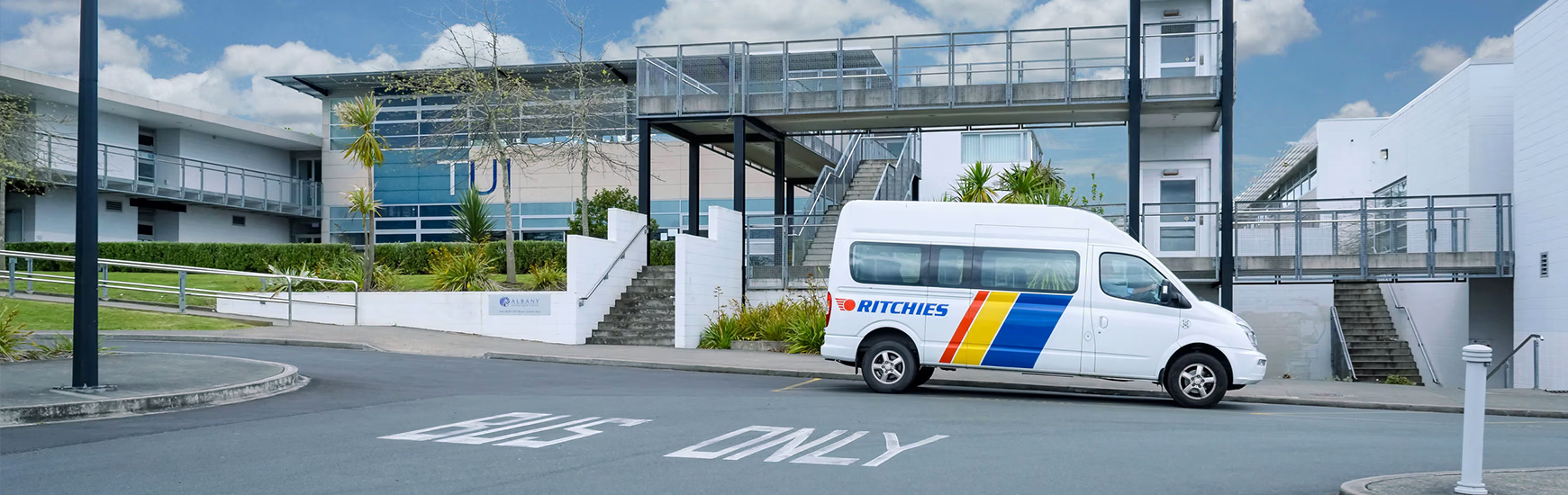
Information for parents and caregivers.
Thank you for trusting us with the transport of your children. It’s a responsibility we take seriously.
Our drivers and teams feel proud of their role safety transporting thousands of students every day. Across New Zealand we offer the full range of school transport services:
- Bus services funded by the Ministry of Education
- School buses funded in urban areas by local authorities
- Special education school transport (SESTA) for eligible students with special needs
- Direct services on contract to individual schools
We also support kura providing safe and reliable charter services for school trips and camps, sports teams, field trips and other school events where affordable and efficient transport is required.
School bus service ‘need to know’:
Our teams sometimes get a lot of questions about school bus services that should go, in the first instance, to your child’s school.
- If your child is starting school, your school can advise on all bus transport options in your area.
- Questions about routes or eligibility for funded transport should be raised with your school or with the Ministry of Education which sets all policy and reviews.
- Not all school buses have seatbelts, but where seatbelts are fitted, they should be used.
- Children are allowed to stand on school buses. A safe loading limit is set for every vehicle.
When and where do the buses run?
You can find Ministry of Education-funded school bus services by contacting your school directly or by using the indicative route maps on the Ministry of Education website.
Schedules for urban school bus services provided by regional councils and authorities can generally be found on their relevant websites.
School bus safety
As parents or caregivers, you are responsible for getting your child to the bus stop and for teaching them how to stay safe on and around the bus. Ensure they understand some of the basics:
- Waiting for the bus, they should keep well away from the road edge
- Form a single line with younger children first
- Carry their backpack or bag so it doesn’t get caught.
- Let the driver know if they receive any injury or feel unwell, as soon as possible
- Never distract the driver in any way while the bus is moving, except in the event of an emergency.
Once on the bus they should quickly choose a seat and sit down and stay in the seat until the bus has stopped. Guides from the NZ Transport Agency and the Ministry of Education have more information on keeping your children safe.
Our teams are responsible for ensuring services are safely provided and that the fleet is well-maintained and fit for purpose. See a Ministry of Education table on roles and responsibilities in school bus transport.
Managing issues or concerns
If you have a concern about any of our services or wish to raise an issue there is a simple process to follow.
Your school, or the transport authority which provides the service, should be your first point of contact. They will let us know about any matters raised and our teams will work with them and you on any resolution.
Priority issues
If the matter is urgent or poses an immediate safety risk please phone or email the school or transport authority.
Operational issues
For concerns affecting daily reliability and route, such as lateness, route concerns or disruption call or email your school or relevant urban transport authority. They will log the issue and liaise with our teams.
Non urgent feedback
Concerns about driver conduct, bus cleanliness, stop locations or policy suggestions that are not immediate safety threats can be provided by email to the school. We will assess and investigate, and the school will keep you informed of any appropriate action that follows.
Inappropriate behaviour and bullying
Your school should be informed if you wish to report any incidents of bullying or inappropriate behaviour by other passengers on the bus. They will then take steps with any students involved to manage the behaviour.
Emergency management
Our drivers are fully trained in management of emergencies and have set procedures to follow to ensure everyone remains calm and safe. Schools will be your main point of contact.
Frequently asked questions
Who decides where bus stops should be on our school bus route?
Bus operators work closely with schools to provide advice on bus stops and routes. If you have a concern or question on bus stops, contact your school in the first instance.
In an emergency situation should I get information from the bus operator or the school?
In an emergency situation it will always be your school who will be the first point of communication with parents. As a transport provider our drivers and operations team will communicate updates of any situation to the school.
How will I tell if the bus is a school bus?
The bus will have a clear school sign on the front and back.
Who is responsible for safety on a bus?
Safety on the bus is a shared responsibility. Schools, caregivers and transport providers must work together to make sure students can travel safely to and from school. Schools are responsible for providing a safe environment at school for unloading and loading buses and for managing inappropriate behaviour on the bus.
My child was removed from the bus, is that legal?
Where behaviour of any passenger doesn’t meet the code of expected conduct, the driver may decide it is unsafe to continue with their route and pull over. They will then call our operations centre and follow procedures which may include calling the police or school the remove the student concerned.
Why is my child not being allowed on the bus?
Schools or transport operators can withdraw a student’s place on a school bus if the problem is serious or ongoing. They can do this temporarily or permanently.
Need help?
Lost property on one of our services? Complete our Lost Property Report
Feedback to share? Our drivers appreciate positive feedback. Let us know


